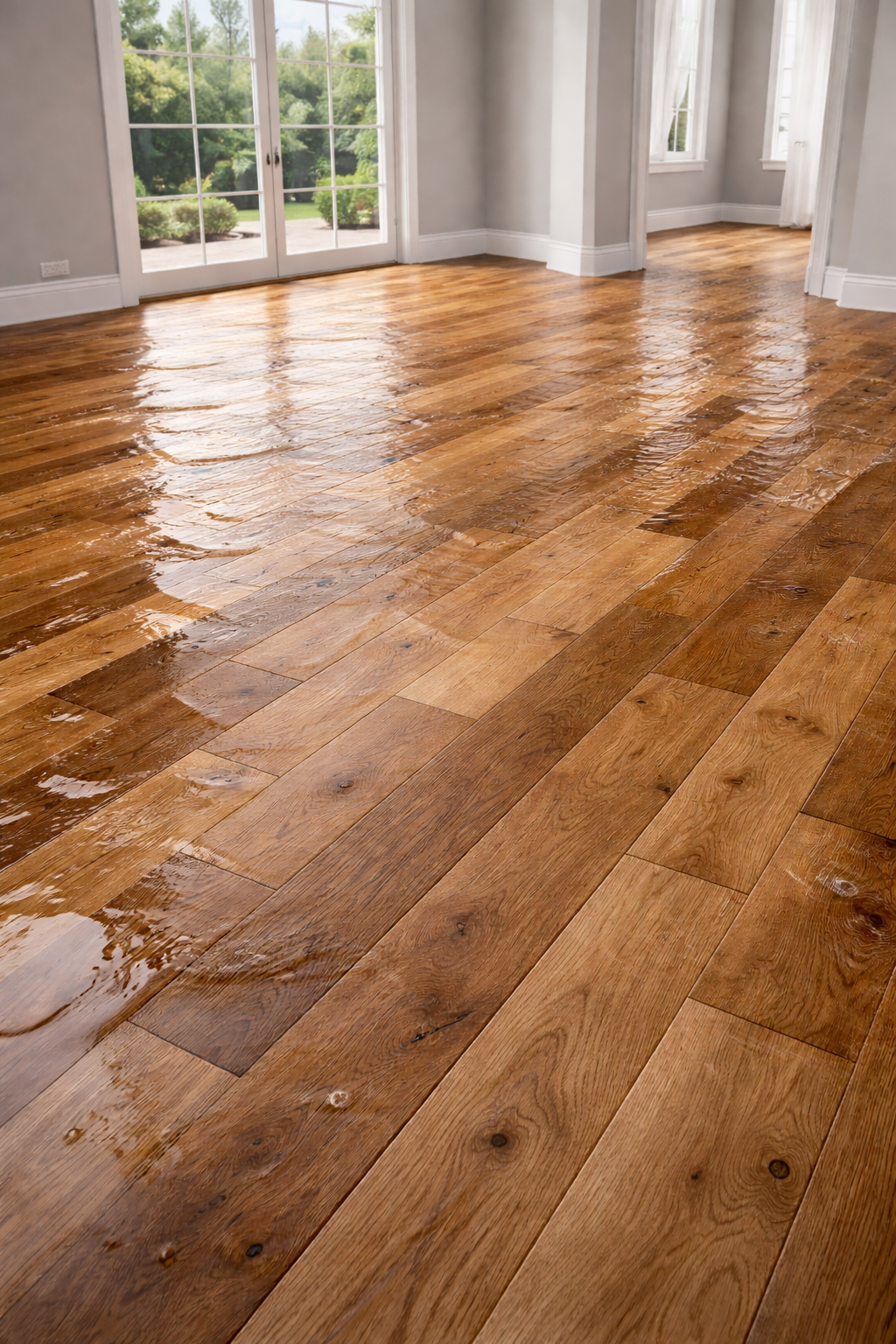
Luxury Vinyl Plank (LVP) flooring has emerged as one of the most desired floorings among homeowners, interior designers, and builders who are attracted by the stylish look of hardwood at a lower cost and with lower maintenance expenses. LVP is made to simulate natural wood, stone, or tile and it is also durable, waterproof, and diverse. Its style, affordability, and practicality make it fit in virtually any room, whether it is kitchens and bathrooms or living rooms and basements.
-
Luxury Vinyl Plank Flooring Explained: A Complete Guide
Vinyl Plank Luxury is a multi-layer synthetic flooring that is created to resemble the look of natural wood or stone but has better strength.
Its layers include:
- Wear Layer: This is a clear top coating that prevents scratches, stains, and fading.
- Design Layer: This layer is made of high-resolution photographic material and imitates wood grains, stone, or tile.
- Core Layer: This is a structural layer, which may be either rigid (SPC/WPC) or flexible.
- Backing Layer: Support, moisture resistance, and occasionally sound insulation.
LVP is very strong, resists moisture, and is very lifelike to look at because of its layered construction which makes the material highly durable, often being impossible to distinguish between it and real hardwood or stone.
-
Types of LVP Flooring
LVP can come in various types based on durability, comfort, and the way of installation:
|
Types |
Description |
Best Use |
|
SPC (Stone Plastic Composite) |
Compact and very tough |
Busy zones, business premises. |
|
WPC (Wood Plastic Composite) |
Very slightly softer and more cushioned. |
Residential spaces where comfort is important |
|
Flexible Vinyl Plank |
Thin, soft, and easier to cut |
DIY projects, small rooms |
|
Click-Lock / Floating |
Interlocking planks; they do not require glue |
Self-made installations, temporary installations |
|
Glue-Down |
Directly attached to the subfloor |
Installation, permanent, use by a professional |
-
Benefits of LVP Flooring
Luxury Vinyl Plank flooring has several benefits over hardwood and tile:
- Waterproof: Ideal to be installed in the bathroom, kitchen, basement, and laundry room.
- Durable: Not easily dented, scratched, or stamped.
- Cost-Effective: Appeals to be made to look like hardwood or stone without spending a lot of money.
- Low Maintenance: Cleaning is easy when one cleans with regular sweeps and with a damp mop.
- Diversity of Designs: Wood, stone, and concrete designs have various textures and finishes.
-
Popular Styles and Designs
The LVP of the present time is available in unlimited styles to fit any interior design:
- Wood-Look Planks: Rustic oak, maple, walnut, and so on with the appearance of the genuine grain.
- Stone-Look Planks: Marble, slate, and travertine to be used to create a luxury look.
- Finishes: Finishes include matte, semi-gloss, hand-scraped, and embossed realism finishes.
- Wide Planks: Minimize surface seams and make it modern.
-
How to Choose the Right LVP
These are the main factors that should be considered when choosing LVP:
- Thickness and Wear Layer: The Cornboard plank shall be thicker in high-traffic places (20+ mil) and thinner in light-traffic places.
- Type Core: SPC is hard and durable; WPC is comfortable and insulated.
- Color & Finish: Choose your interior design style; wood color or neutral colors are a good choice to use as a design that fits all.
- Warranty: A good warranty is an indication of the manufacturer’s confidence concerning durability.
-
How to Install Luxury Vinyl Plank: Complete Step-by-Step Guide
Luxury Vinyl Plank flooring can be installed in a professional way so that it holds a long-lasting finish. These four steps will assist in avoiding the usual problems such as gaps, warping, or misalignment.
Read more:
-
Step 1: Prepare the Subfloor
The subfloor should be dry and clean and flat, unless it is installed. Take off old flooring, dust, or debris, and patch the uneven space. Proper subfloor preparation ensures that there is no gap, planks become level, and that the planks will not be broken in the future, thus giving a stable base through which the installation will be perfect.
-
Step 2: Acclimate the Planks
LVP planks should be left to dry in the room for at least 48 hours. This adapts them to temperature and humidity conditions and reduces the expansion or contraction that occurs after installation and secures a secure, uniform, and lasting flooring outcome.
-
Step 3: Plan and Install the Layout
Draw the room out and do your planning beginning with the longest side. Lay out the pattern in dry-lay planks leaving adequate expansion gaps, and lay the first row, though, to form a straight even base to the rest of the planks.
-
Step 4: Finish and Inspect
Install the baseboards or mouldings to cover expansion gaps once all the planks are installed, and then remove spacers. Check on any misaligned seams, scratches, or gaps, and clean until the polished professional appearance of the floor is obtained and is ready to be used.
-
Conclusion
Luxury Vinyl Plank flooring is a combination of durability, style, and affordability hence suitable in contemporary houses. Its durability in beauty is long-lived and it is water-resistant, low in maintenance, and versatile in its designs. With proper installation and proper care, homeowners can also have an elegant, professional floor that adds value to any given space besides being practical, comfortable, and aesthetically appealing with timeless value.
FAQs
Is LVP strong enough to bear heavy furniture?
Yeah, LVP is resistant and able to hold the heavy furniture without breaking.
Does LVP contain harmful chemicals inside the building?
No, the majority of good LVP is not volatile and is safe inside.
Are LVPs possible to be laid on concrete floors?
Yes, concrete floors are good provided they are first leveled.